

As a doctor, I’ve often noticed how the smallest daily food habits—the ones we don’t even think about—are the ones that quietly shape our long-term health. Nuts are a perfect example: they are universally labeled as “healthy,” which often leads people to unknowingly overindulge. Understanding exactly how many nuts per day are safe is vital because that line between “nutritious” and “excessive” is thinner than most realize.
Are Nuts Healthy to Eat Every Day?
The short answer is yes. Nuts can be a power addition to your daily routine as long as you respect portion sizes. They are loaded with healthy fats, plant protein, fiber, and essential minerals that support everything from heart health to brain function and immunity.
However, we have to talk about density. Nuts are incredibly calorie-dense. Because a small handful can easily pack 170–200 calories, eating them mindlessly while you work or watch TV can lead to a massive calorie intake without you even noticing.
The Doctor-Approved Daily Limit
To get the benefits without the side effects, I recommend a daily intake of one small handful (roughly 28–30 grams).
Here is the breakdown for common varieties:
- Almonds: 20–23 nuts
- Walnuts: 7–9 halves
- Cashews: 15–18 nuts
- Pistachios: 30–35 nuts
- Peanuts: 25–30 nuts
While peanuts are a popular staple, they are technically legumes. For those looking for the best heart-health benefits, I generally suggest tree nuts due to their higher omega-3 content.
Read about Winter Immune-Boosting Habits: How to Protect Yourself From Flu, Colds & RSV
| Nut Type | Recommended Daily Serving | Key Health Benefit |
| Almonds | 20–23 nuts | Heart health and immunity |
| Walnuts | 7–9 halves | High Omega-3 content |
| Cashews | 15–18 nuts | Plant protein and minerals |
| Pistachios | 30–35 nuts | Fiber and vitamins |
| Peanuts | 25–30 nuts | Affordable plant protein |

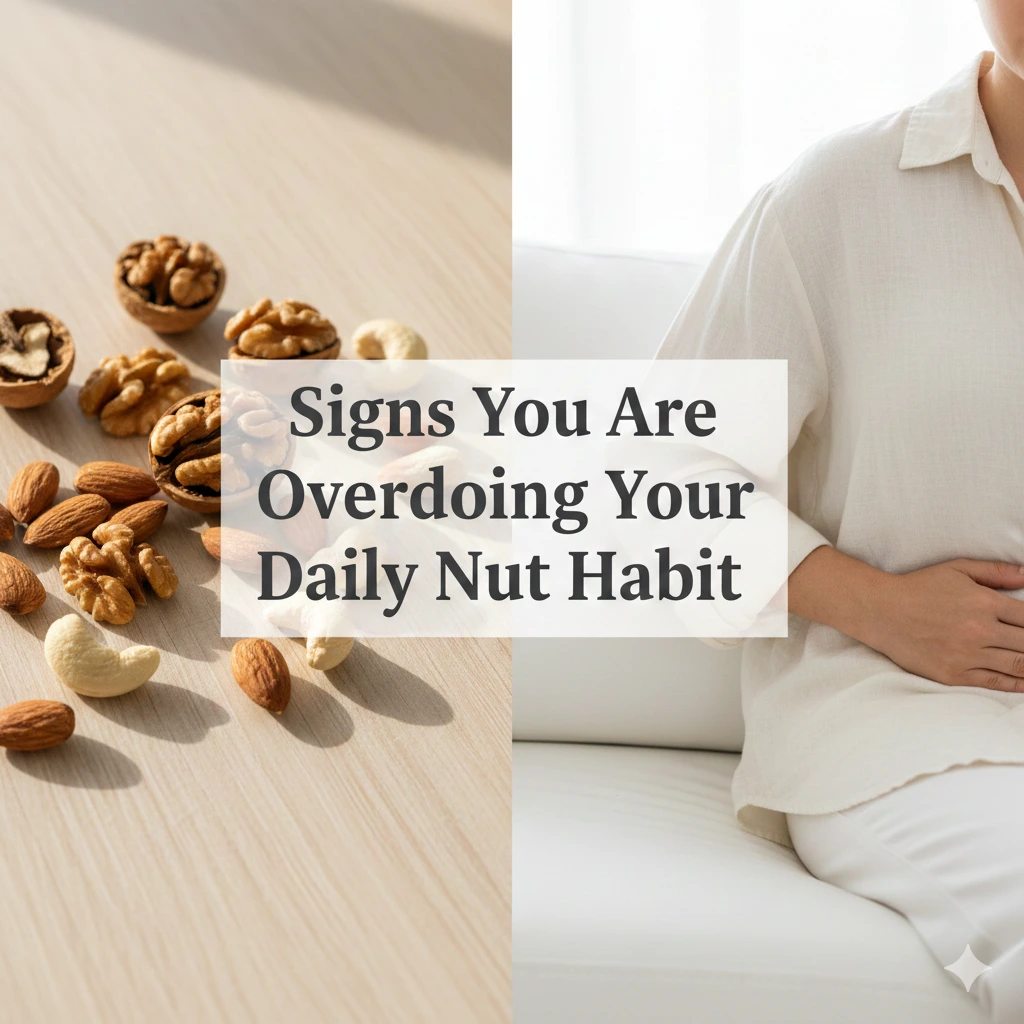
Signs You Are Overdoing It
Your body is excellent at signaling when a “healthy” habit has gone too far. If you are eating too many nuts, you may notice:
- Unexpected weight gain
- Digestive discomfort like bloating or reflux
- Blood sugar spikes, especially if the nuts are sweetened
Read about Biryani Culinary Chronicles: From Then to Now
Practical Tips for Better Habits
To make your nut habit truly work for your health, try these simple adjustments:
- The Prep: If you are a busy adult, pre-portion your nuts into containers so you aren’t tempted to eat out of the bag.
- The Quality: Choose raw or dry-roasted versions. Avoid those covered in heavy salt or sugar.
- The Strategy: If you are weight-conscious, use nuts to replace unhealthy snacks rather than just adding them on top of your existing meals.

Nuts for Diabetics: What You Need to Know
For those managing diabetes, nuts can be an excellent snack choice because they have a low glycemic index and provide healthy fats that help stabilize blood sugar. However, the way you eat them matters just as much as the quantity.
- Avoid Sweetened Varieties: Diabetics should strictly avoid honey-roasted, chocolate-covered, or sweetened nuts to prevent blood sugar spikes.
- Watch the Salt: Excess sodium can impact blood pressure, so raw or dry-roasted unsalted nuts are the best medical choice.
- Fiber Benefits: The high fiber content in nuts is particularly beneficial for diabetic readers, as it slows down the absorption of sugar in the bloodstream.
Nuts for Weight Management
While nuts are calorie-dense, they are a powerful tool for weight control if used correctly.
- The Replacement Strategy: Use nuts to replace unhealthy snacks like chips or cookies rather than adding them on top of your existing diet.
- Satiety: The fiber and protein in nuts help you feel full longer, which can prevent overeating later in the day.
- Watch for Overindulgence: Be mindful that eating too many nuts can lead to weight gain due to their high calorie density.
The Final Takeaway: Nuts are a nutritional gift, but moderation is the key to unlocking their benefits. Keep your portions in check to ensure your healthy habits actually stay healthy.
Medical Disclaimer: This article is for educational purposes only.
Frequently Asked Questions
1. Is it safe to eat nuts every single day? Yes, nuts can be a healthy part of a daily routine as long as you respect portion sizes. They provide essential nutrients like healthy fats, plant protein, and fiber that support heart and brain health.
2. How many nuts should I eat for weight loss? If you are weight-conscious, the goal is to replace unhealthy snacks with a controlled portion of nuts rather than adding them to your current diet. A safe daily amount is one small handful, or about 28–30 grams.
3. What are the side effects of eating too many nuts? Overindulging can lead to physical symptoms such as bloating, acid reflux, and unexpected weight gain. In some cases, especially with sweetened varieties, it can also cause blood sugar spikes.
4. Which are better: peanuts or tree nuts? While peanuts are popular, they are technically legumes. Tree nuts (like walnuts) generally offer superior heart-health benefits because of their higher omega-3 content.
5. Should I eat raw or roasted nuts? For the healthiest daily habit, it is best to choose raw or dry-roasted nuts. You should try to avoid varieties that are processed with heavy salt or added sugars.
Summary Checklist for Your Daily Habit
- Check the Label: Stick to raw or dry-roasted nuts to avoid unnecessary salt or sugar.
- Watch for Signs: If you experience bloating, reflux, or unexpected weight gain, it may be a sign you are overdoing it.
- Pre-Portion: Don’t eat straight from the bag; use small containers to ensure you stay within the safe limit of one small handful.
- Smart Swaps: Use your nut serving to replace unhealthy snacks rather than adding them on top of your current diet
Building a healthy daily habit doesn’t have to be complicated, but it does require awareness. By choosing the right varieties and sticking to a doctor-approved portion size, you can enjoy the nutritional benefits nuts offer without the pitfalls of overindulgence.
I’d love to hear from you—what is your favorite nut to snack on, and do you find it easy to stick to one handful?