
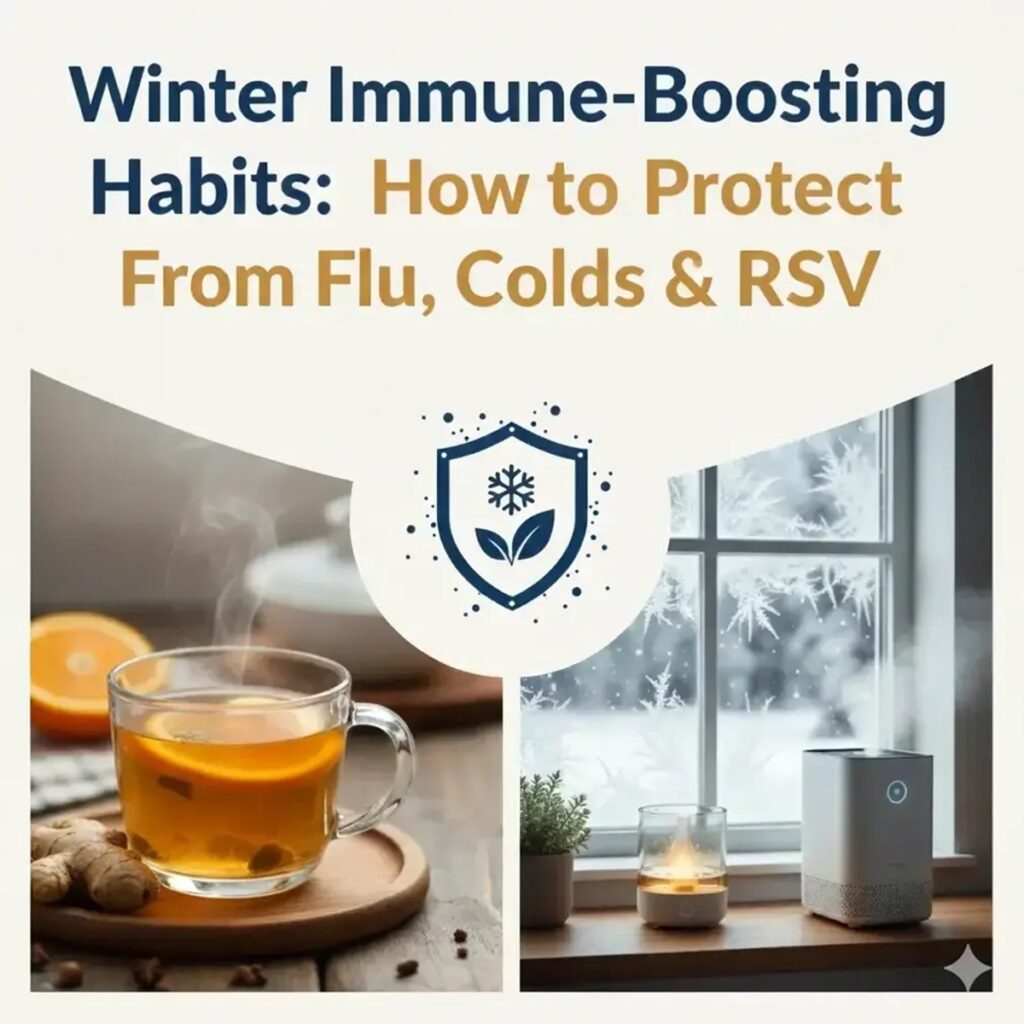
I’m a doctor—an anesthesiologist by profession—and through both training and experience, I’ve learned that winter places extra stress on the body. Colder weather, dry indoor air, and seasonal changes can affect respiratory comfort and overall immunity for many people. That’s why I became deeply interested in winter immune boosting habits—not only from a clinical perspective, but as part of a proactive, prevention-focused approach to staying healthy during the colder months.
Over the years, through both medical training and lived experience, I’ve learned something very important: immunity in winter is built through habits, not shortcuts. There is no single pill or quick fix that can “save” your immune system during flu season, cold outbreaks, or RSV surges. What truly works is consistency—small, science-backed daily choices that support your body when it’s under seasonal stress.
These winter immune boosting habits are practical, evidence-based, and designed for real life. They’re the same habits I follow myself to stay healthier, breathe easier, and feel more resilient throughout winter. Let’s go step by step.
Habit 1: Prioritize Vitamin D Like a Daily Medicine
Vitamin D is one of the most important—and most overlooked—nutrients for winter immunity. As a doctor, I routinely see low vitamin D levels in patients during winter months, especially in the U.S., where sunlight exposure drops significantly.
Vitamin D plays a key role in activating immune cells that fight viruses. When levels are low, your body’s ability to respond to infections like flu, colds, and RSV becomes weaker. For people like me—with asthma or allergies—low vitamin D can also worsen respiratory symptoms.
In winter, relying only on sunlight is often not enough. Shorter days, cloudy weather, and staying indoors all contribute to deficiency. That’s why winter immune boosting habits must include intentional vitamin D support.
You can start by adding vitamin D–rich foods such as fatty fish, eggs, and fortified milk or plant milk. Morning sunlight exposure, even for 10–15 minutes near a window or outdoors, can help when available. Many adults benefit from supplementation, but this should always be discussed with a healthcare provider.
Think of vitamin D not as a supplement—but as foundational immune support during winter.
Habit 2: Make Warm Fluids a Daily Winter Ritual
One of the simplest yet most powerful winter immune boosting habits is drinking warm fluids regularly. In cold weather, people often drink less water because they don’t feel thirsty—but dehydration silently weakens immunity.
Warm fluids help keep the lining of your nose, throat, and lungs moist. This is crucial because dry mucous membranes are more vulnerable to viral entry. As someone with asthma and allergies, I personally rely on warm drinks to keep my airways calm and less reactive.
Warm water, herbal teas, and broths improve circulation, support digestion, and soothe irritated respiratory passages. They also help thin mucus, making it easier for your body to clear out germs.
Excellent winter options include ginger tea, chamomile tea, peppermint tea, bone broth, and vegetable soups. Even plain warm water can make a difference if consumed consistently throughout the day.
Try building a habit around it—warm water in the morning, tea in the afternoon, soup or broth in the evening. These small rituals don’t just boost immunity; they also create comfort and calm during winter months.
Read more about hydration habits.
Habit 3: Eat for Immunity, Not Just Comfort
Winter cravings are real—and completely human. However, many comfort foods are high in sugar and refined carbohydrates, which can suppress immune function when eaten frequently.
One of the most effective winter immune boosting habits is shifting your mindset from “comfort eating” to “comfort with nourishment.”
Your immune system needs vitamins, minerals, antioxidants, and healthy fats to function properly. Foods rich in vitamin C, zinc, and anti-inflammatory compounds help your body fight infections more effectively.
Citrus fruits, berries, bell peppers, nuts, seeds, legumes, yogurt, garlic, ginger, and turmeric are excellent winter choices. Warm meals like soups, stews, and lentils are easier to digest and naturally supportive of immunity.
This doesn’t mean eliminating comfort foods entirely. Instead, upgrade them. Choose homemade versions, reduce sugar, and add nutrient-dense ingredients. For example, add vegetables to soups, nuts to oatmeal, and spices like cinnamon and turmeric to warm drinks.
Food is information for your immune system—choose wisely, especially in winter.

Habit 4: Improve Indoor Air Quality (Especially If You Have Allergies or Asthma)
In winter, we spend most of our time indoors, making indoor air quality one of the most underestimated winter immune boosting habits.
Heating systems dry out the air, which irritates the respiratory tract. Dry air damages the protective lining of your nose and lungs, making it easier for viruses like flu and RSV to enter the body. This is particularly challenging for people with asthma or allergies—I feel this personally every winter.
Using a humidifier can significantly improve comfort and respiratory health by maintaining proper moisture levels in the air. Even moderate humidity can reduce throat irritation, nasal dryness, and coughing.
Ventilation is equally important. Opening windows for even 5–10 minutes daily allows fresh air to circulate and reduces viral concentration indoors. Regular cleaning of air filters, avoiding strong fragrances, and keeping dust under control also help.
A healthy indoor environment supports your immune system quietly, consistently, and effectively—without requiring effort once the habit is set.

Habit 5: Protect Your Sleep Like It’s Immune Medicine
Sleep is not rest—it is repair. During deep sleep, your immune system produces protective proteins and strengthens its response to infections.
One of the most powerful winter immune boosting habits is prioritizing sleep consistency. Unfortunately, winter disrupts sleep patterns due to reduced daylight, increased screen time, and irregular routines.
Lack of sleep reduces antibody production and increases inflammation, making you more susceptible to illness. Even one week of poor sleep can weaken immune defenses.
Create a winter-friendly sleep routine: dim lights after sunset, avoid screens at least one hour before bed, keep your bedroom warm and comfortable, and maintain consistent sleep and wake times.
Warm showers before bed help relax muscles and signal the body that it’s time to sleep. Herbal teas like chamomile can also support relaxation.
Sleep is one of the most underrated but effective immune boosters—treat it as essential healthcare.
Read about 5 WAYS TO EMBRACE SERENITY IN YOUR DAILY LIFE
Habit 6: Move Your Body Gently but Consistently
Exercise strengthens immunity—but in winter, it doesn’t need to be intense. One of the most sustainable winter immune boosting habits is gentle, regular movement.
Physical activity improves circulation, allowing immune cells to travel more efficiently throughout the body. It also reduces stress hormones, which can suppress immune function when chronically elevated.
In cold weather, indoor movement becomes especially important. Simple activities like stretching, yoga, walking indoors, dancing, or short home workouts can make a big difference.
Even 10–15 minutes of daily movement improves mood, supports metabolism, and enhances immune response. If weather permits, short outdoor walks provide both movement and sunlight exposure.
The goal is consistency—not perfection. Your immune system benefits more from regular gentle movement than from occasional intense workouts.
Habit 7: Reduce Stress to Strengthen Immunity
Chronic stress is one of the fastest ways to weaken your immune system. Stress hormones like cortisol suppress immune activity when elevated for long periods.
Winter naturally brings more stress—less sunlight, disrupted routines, holidays, work pressure, and isolation. That’s why stress management is a critical winter immune boosting habit.
Simple daily practices can significantly reduce stress. Deep breathing for even five minutes lowers cortisol levels. Mindfulness, prayer, meditation, journaling, or gratitude practices help regulate emotional responses.

Habit 8: Practice Smart Hygiene Without Obsession
Hygiene remains a cornerstone of winter immune boosting habits, especially during flu and RSV season. However, it should be practical, not anxiety-driven.
Handwashing after public exposure, before eating, and after using shared spaces reduces viral transmission significantly. Cleaning frequently touched surfaces—phones, doorknobs, keyboards—also matters.
Avoid touching your face unnecessarily, especially in public places. Teach children proper hand hygiene in a calm, empowering way.
Good hygiene protects you and those around you, particularly vulnerable individuals like children, older adults, and people with chronic conditions
Habit 9: Reduce Sugar to Support Immune Cells
High sugar intake temporarily weakens immune cell function. During winter, sugary snacks and drinks are often consumed more frequently, especially around holidays.
Reducing sugar—even slightly—is a powerful winter immune boosting habit. This doesn’t mean eliminating all sweets, but choosing them mindfully.
Replace frequent sugary snacks with fruits, nuts, dark chocolate, or warm spiced drinks. Balance treats with nutrient-dense meals.
Small changes create meaningful immune benefits over time.
Habit 10: Protect Vulnerable Family Members Through Collective Habits
Immunity is not just personal—it’s collective. Children, elderly family members, and people with asthma, diabetes, or chronic illness are more vulnerable during winter.
Creating family-wide winter immune boosting habits—good ventilation, hygiene, nutrition, and sleep—protects everyone.
Avoid visiting others when sick, encourage rest, and prioritize health over social pressure. Prevention is an act of care.
When to Seek Medical Help
Please don’t ignore warning signs.
Seek medical advice if you notice:
- Persistent high fever
- Difficulty breathing
- Chest tightness
- Extreme fatigue
- Symptoms worsening after 3–4 days
Especially important for children and people with asthma or chronic conditions.
Final Thoughts
As a doctor—and as someone who personally navigates asthma and allergies—I truly believe that winter immune boosting habits are acts of self-respect.
You don’t need perfection. You need consistency.
Choose a few habits from this list and start today. Your immune system will thank you—this winter and beyond.
Pingback: How Many Nuts Per Day? Daily Nut Habits, How Much Is Too Much - Habits to Live By